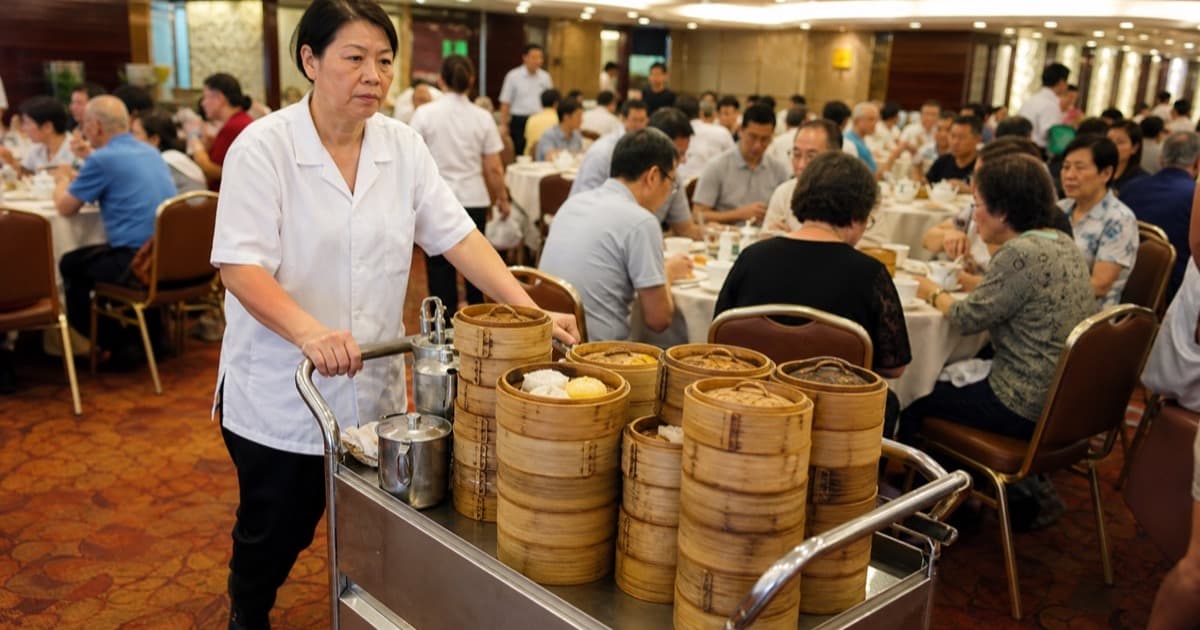
Cart-service dim sum means servers push stainless steel trolleys loaded with covered steamer baskets around the dining room, lifting lids table by table while you point at what looks good. No menu, no waiting for a waiter: dinner comes to you. It is the most fun version of dim sum and, sadly, a shrinking one, since many kitchens have switched to order sheets and table-side QR codes.
This guide covers how carts work, why they are disappearing, where the tradition still thrives, and how to confirm a restaurant still runs them before you go.
How cart service actually works
The mechanics are simple once you have seen them once:
- You are seated and given a card stamped with your table number.
- Carts circulate in loops: one with steamed dishes, one with fried and pan-fried items, sometimes a dessert cart near the end.
- When a server lifts a lid, look. Point at anything you want; they set it on your table and stamp or mark your card.
- At the end, take your card to the cashier. Your stamps are tallied into the bill.
Prices follow a tier system rather than per-dish tags: small, medium, large, special and occasionally party. Our dim sum cost guide explains typical pricing at each tier.
Why carts are disappearing
Labor costs are the main reason. Running carts requires extra staff pushing trolleys all morning and kitchens producing steady small batches instead of cooking to order. Many respected houses switched to pencil-and-paper ordering years ago because it wastes less food and suits smaller dining rooms. The trade-off is real: menus give you a wider range of dishes made fresher, but they lose the serendipity of grabbing a mystery basket off a passing trolley.
The good news: cart culture remains strong wherever Cantonese banquet halls still anchor the community.
Where to find cart-style dim sum today
Large banquet halls with big weekend crowds are the natural habitat of the surviving carts. A few patterns from our directory:
San Francisco. The city kept its cart tradition longer than almost anywhere. City View Restaurant near Chinatown and Yank Sing downtown are both long associated with rolling trolleys; see our full San Francisco Chinatown guide.
New York. In Flushing, Queens, Asian Jewels is known for weekend cart service in a big hall that fills fast. Manhattan's Dim Sum Palace locations run a hybrid: menu ordering plus roaming trays during peak hours.
Chicago. The South Side Chinatown halls such as New Furama Restaurant and Phoenix Restaurant come from the cart era; weekend service is when they feel most classic.
Vancouver. Old-school houses like Pink Pearl and Sun Sui Wah carry the banquet-hall DNA that carts were built for.
Service models change year to year, so treat any list as a starting point and call ahead. Ask one question: "Do you have push carts on weekends?" If the answer is no, you will still eat well; the kitchens behind those carts did not stop making har gow.
Tips for your first cart meal
- Arrive early. Carts start around opening time and the best variety moves between opening and noon. By 1 p.m. the steamers thin out.
- Look before you lift. Let the server show the whole cart; grabbing the first basket means missing what was underneath.
- Pace your table. Stamps accumulate quickly. Two to three dishes per person is plenty; you can always flag the dessert cart later.
- Keep the card visible. It is your bill. Losing it creates an awkward negotiation at the register.
- Bring a group. Four or more people can cover fried, steamed, rice and sweet without anyone overordering.
For everything else, from finger-tapping thanks to teapot refills, read our dim sum etiquette guide, then browse the full dim sum directory to find a hall near you.