Most people spend $15 to $30 per person at a mid-range dim sum restaurant in North America, before tip. Bakery counters run under $10 a head, upscale rooms in big cities regularly cross $40, and prices in London, Vancouver or Sydney shift with the local currency. Dim sum is rarely expensive for what you get; it just rewards groups who order with a plan.
Here is how bills actually build up, and where the money goes.
How dim sum pricing works: the tier system
Dim sum menus price dishes in tiers rather than one flat rate:
| Tier | Typical US range | What lives here |
|---|---|---|
| Small | $4 to $7 | Har gow, siu mai, basic steamed dumplings |
| Medium | $6 to $9 | Rice rolls (cheung fun), buns, turnip cake |
| Large | $8 to $12 | Sticky rice in lotus leaf, pan-fried dishes |
| Special | $10 to $16 | Seafood dumplings, chef's signatures |
| Party / BBQ | $15 to $40+ | Whole roast items, platters, premium seafood |
At cart-service restaurants your card gets stamped with the tier letter each time you take a basket; the cashier tallies letters into dollars at the end. Tea sometimes carries a small per-person charge, and larger parties may see an automatic service gratuity printed on the bill.
What real tables spend
Three common scenarios at mid-range prices:
- Two people: four dishes plus tea, roughly $30 to $45 total. Comfortable, slightly indulgent.
- Family of four: eight to ten mixed dishes, roughly $60 to $90 before tip. This is the sweet spot where dim sum shines.
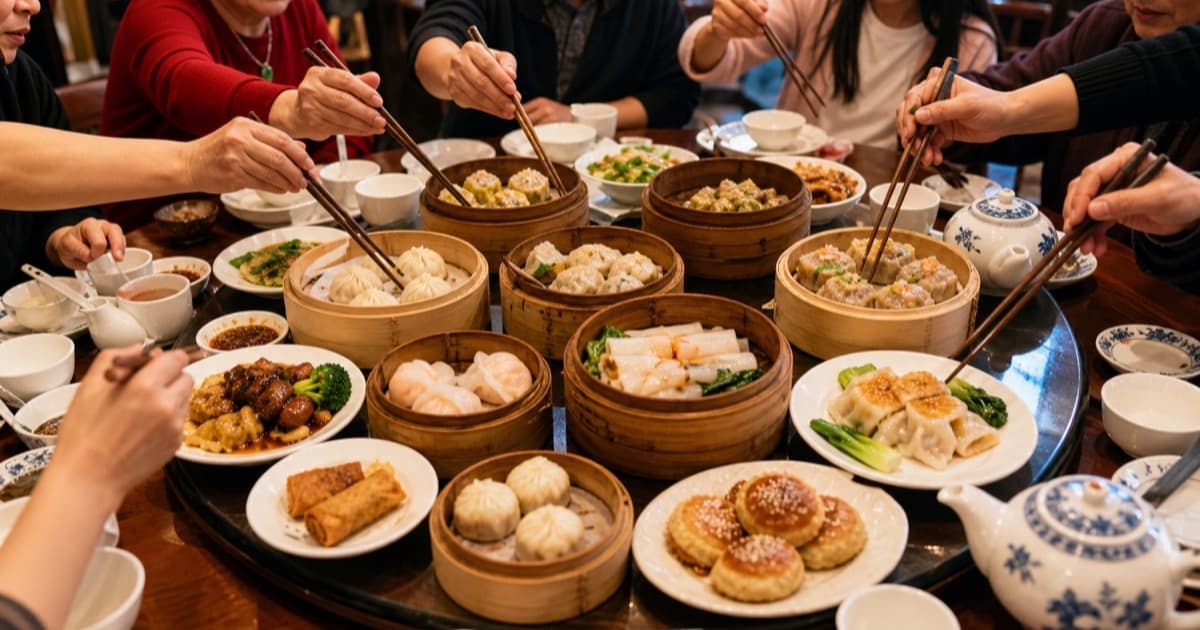
- Table of eight to ten: fifteen to twenty dishes across every steamer and dessert cart, typically $20 to $35 per person. More people means more variety without much extra cost per head.
Upscale rooms like Yank Sing in San Francisco sit above these ranges; neighborhood counters like Good Mong Kok sit far below them. Our San Francisco guide shows both extremes within walking distance of each other.
Why group size changes everything
Dim sum is priced per dish but experienced per table. A solo diner pays full freight for variety: three dishes alone might cost what feeds four people modestly. A table of six orders twelve different things and everyone tastes all twelve.
If you are eating alone or as a pair, bakery-style counters solve the economics: individual items priced a few dollars each, no seating minimums, no tipping pressure.
City-by-city reality
Same food, different math:
- New York: Manhattan Chinatown runs $25 to $40 per person at sit-down halls; Flushing delivers comparable quality for less. See our Flushing guide.
- London: expect £20 to £35 per person in Soho and Chinatown, more at glamour rooms like Yauatcha. Details in our London dim sum guide.
- Vancouver and Toronto: CAD 20 to 35 per person is typical at banquet halls, among the best value in the Cantonese world thanks to deep competition.
- Sydney: yum cha runs AUD 25 to 45 per person in the city core.
- Smaller cities: often the best value of all; suburban banquet halls compete hard on price.
Five ways to spend less
- Go on a weekday morning. Some halls discount early service, and you avoid weekend surge crowds regardless.
- Anchor on small-tier dishes. Dumplings and rice rolls fill the table for less than party-tier platters.
- Use bakery counters for casual meals. Full breakfast under $10 in San Francisco's Chinatown.
- Watch the stamp card. At carts it is easy to accumulate specials unknowingly; glance at your card occasionally.
- Skip premium teas. Standard jasmine or pu-erh costs little; rare tea lists do not change the meal.
The bottom line
Budget $20 to $30 per person for a proper dim sum feast in most cities, bring friends, and treat anything above $40 as a special occasion rather than the norm. When you are ready to spend, browse the dim sum directory, check photos and diner notes first, and read what to order so every dollar lands on a good dish.