Dim sum etiquette is easier than it looks. The genuinely important rules are few: keep your teapot lid open when it needs refilling, tap two fingers to say thanks when someone pours for you, and share everything family style. Everything else is optional grace. Regulars respect newcomers who try, not newcomers who perform.
Here is what each tradition means and how to handle a full dim sum hall without anxiety.
The teapot lid trick
This is the one rule worth memorizing. When your pot runs empty, rest the lid open on the handle or rim, tilted back. In a busy hall nobody has time to check every table; an open lid is the universal signal that says "more tea, please." A server walking past will refill you without being called. Closing the lid signals the opposite: we are finished.
Tapping fingers: where it comes from
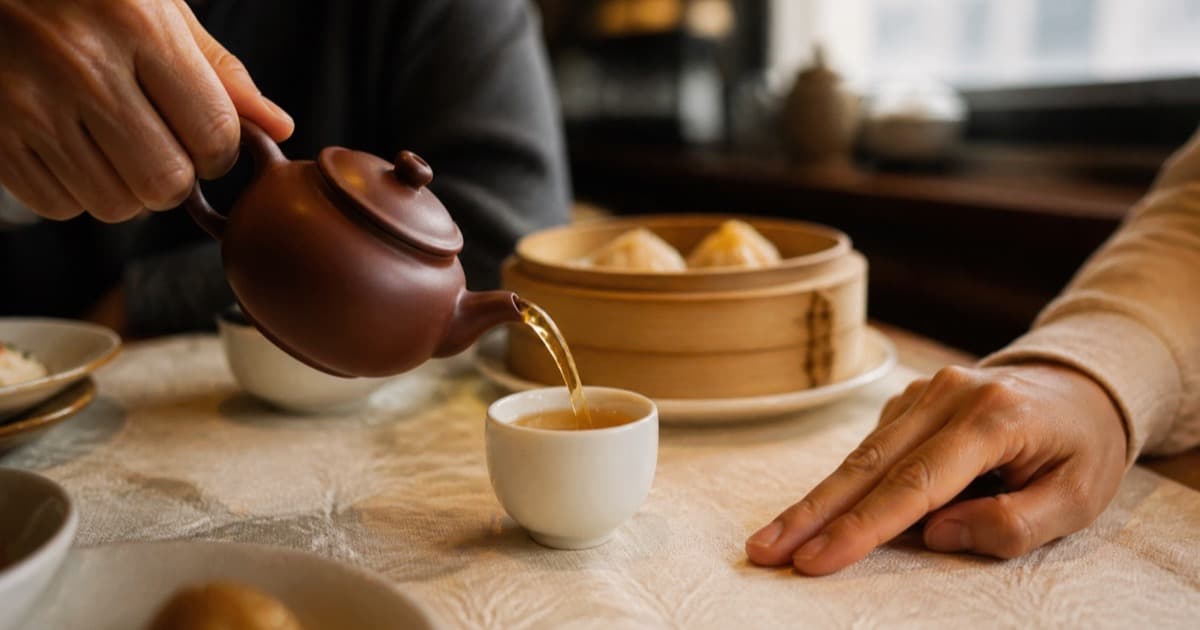
When someone pours tea into your cup, curl two fingers and tap the table twice. It is a silent "thank you," useful when both hands are busy or conversation is loud.
The origin story regulars love: legend holds that the Qianlong Emperor traveled incognito through southern China and poured tea for his companions. Courtiers could not kneel and expose the emperor's identity, so they tapped bent fingers on the table to mimic kneeling bows. Whether or not emperors actually did brunch, the gesture stuck.
You do not need to tap for servers doing their job, though nobody will mind if you do.
Pouring order
If you are nearest the pot:
- Fill other people's cups first, moving around the table.
- Fill your own last.
- Hold the pot's lid with one finger while pouring so it does not slide off.
Nobody keeps score, but the person who pours for the table before themselves quietly earns everyone's approval. Cups should be filled to about seventy percent, not brimming.
Handling steamers and sharing
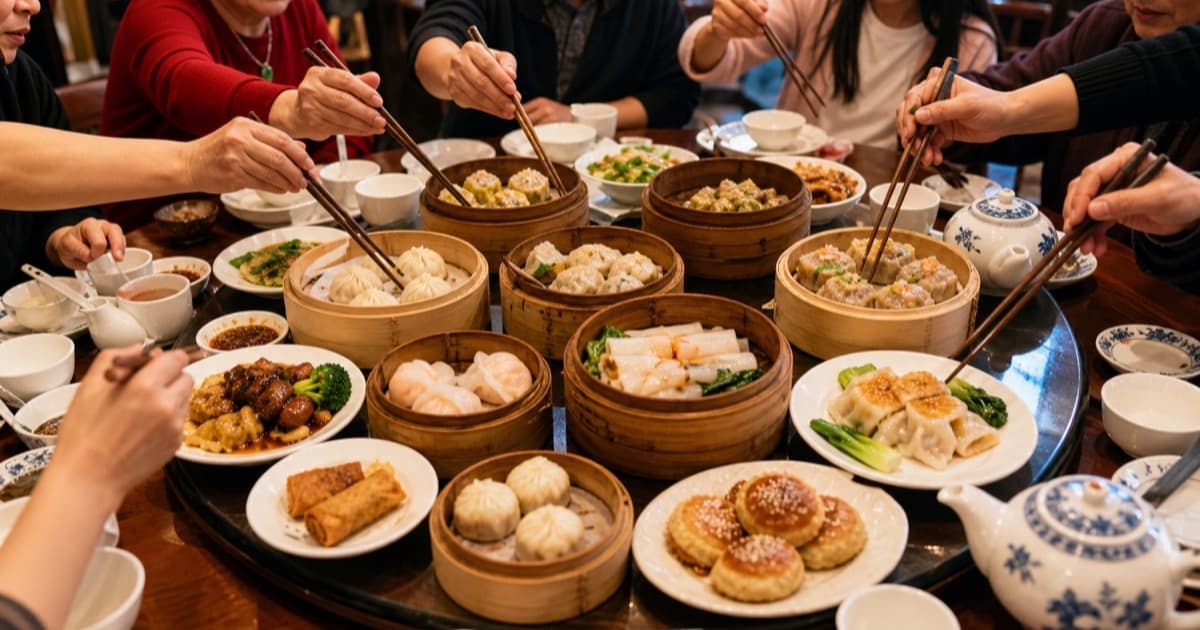
Dim sum arrives family style, so a few habits keep the table civil:
- Spin or pass, never reach. On round tables with a lazy Susan, turn it gently and announce yourself; never spin it while someone is mid-bite.
- Point steamers toward the group rather than keeping the best basket on your side.
- Use serving chopsticks or the back end of your own when taking from shared plates. Most halls provide communal pairs.
- Take your share, not the basket. One or two pieces per person per dish leaves enough for the table; you can always order another round.
- Let elders and guests go first. It costs nothing and is noticed.
The stamp card and the bill
At cart-service restaurants your table card gets stamped with each dish. Keep it visible at the edge of the table, hand it to the cashier when leaving, and expect to pay at a register rather than at the table in most traditional halls. Tipping follows normal US customs, roughly 15 to 20 percent for table service; in the UK and Australia service charges work as they do elsewhere. Our cost-per-person guide covers typical bills.
Things that matter less than you fear
- Chopstick technique. Nobody fails dim sum for imperfect chopsticks; ask for a fork if that is your life.
- Loud rooms. Dim sum halls are boisterous by design. Children, birthday songs and clattering carts are features, not disruptions.
- Ordering "wrong." Pointing at a passing cart is a complete sentence. Read our cart guide and you are already ahead of most first-timers.
- Tea choice. Jasmine, pu-erh, chrysanthemum: all correct answers.
The spirit of it
Yum cha grew out of teahouse culture: slow mornings, shared tables, tea as the anchor. Every rule above exists to make sharing smoother. Follow the lid trick, tap your thanks, pour for others, and you are doing it right. Then pick a spot in the directory and practice.