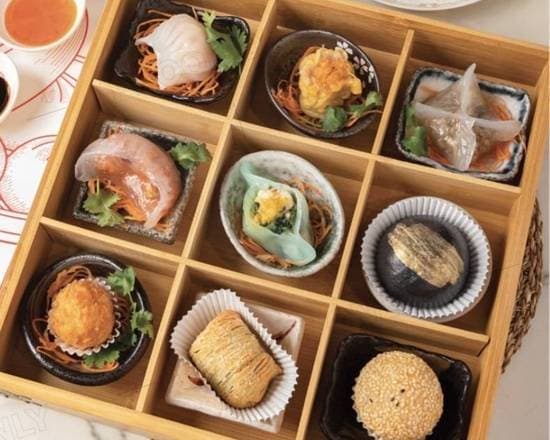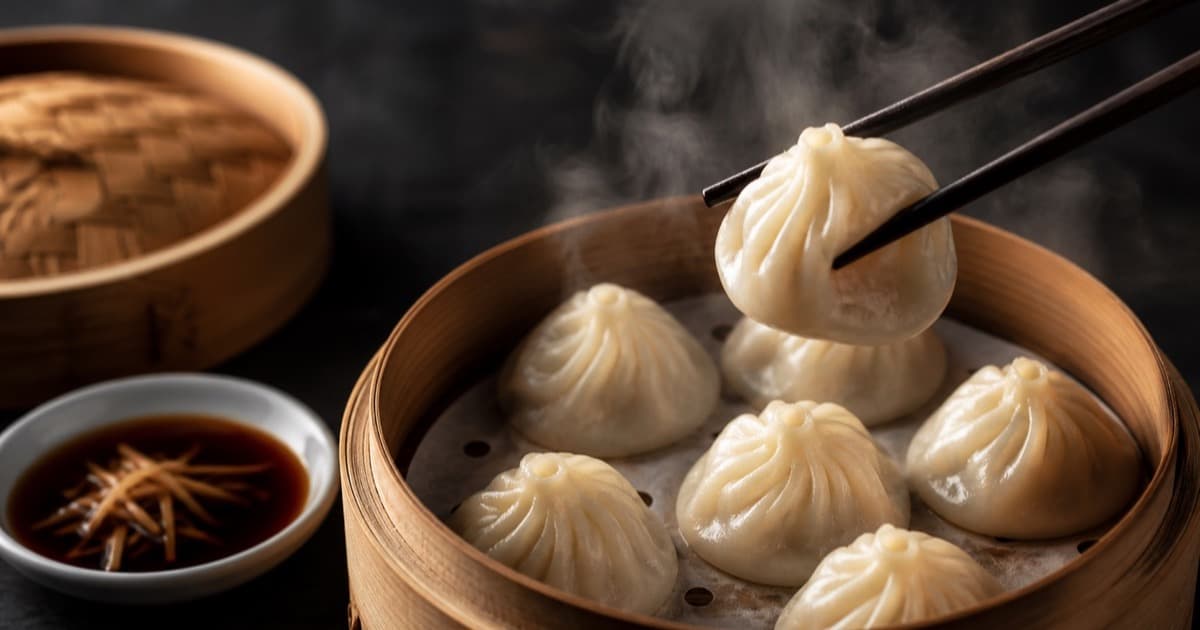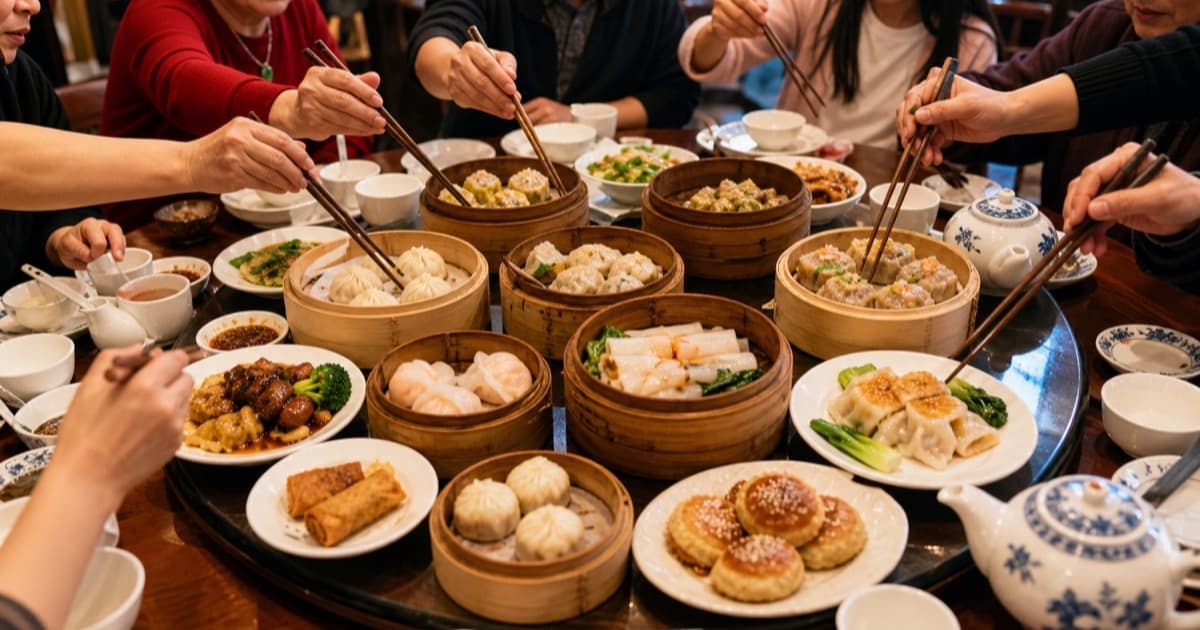
Dim sum is the best group meal in Chinese cuisine and possibly any cuisine: round tables, shared steamers, tea that keeps coming, and a menu wide enough to please picky in-laws, adventurous teenagers and everyone between. The catch is logistics. Big tables at popular halls get claimed early, ordering for ten needs a strategy, and the bill splitting conversation goes better with a plan.
This guide covers booking, ordering math, and which kinds of restaurants handle large parties well.
Why dim sum wins for groups
Three structural reasons:
- Everything shares. Every dish arrives in units of four to six pieces; there is no "what are you having" negotiation.
- Pacing is self-regulating. Carts and staggered kitchen orders mean the table eats continuously without formal courses, so nobody waits while someone photographs their entree.
- Range covers every diet. Seafood dumplings, pork buns, vegetable rolls, rice dishes and desserts all coexist on one menu. Our vegetarian dim sum guide maps the meat-free column for mixed tables.
Booking the table
- Call ahead once you pass six people. Many banquet halls seat walk-ins freely at small tables but reserve round tables of ten and up.
- Ask for the round table. Chinese banquet rooms revolve around them; lazy Susans solve the passing problem entirely.
- Weekend mornings are peak. Halls like Asian Jewels in Flushing or Chicago's MingHin Cuisine fill by 11:30 Sunday. Book, or arrive at opening.
- Banquet rooms exist for a reason. For birthdays and work lunches over fifteen people, ask whether they have a private room; many do, often with no minimum beyond a sensible food spend.
What to order: the group math
A dependable formula: number of dishes equals headcount plus two, spread across categories.
For a table of eight, order roughly ten items:
| Category | Dishes | Examples |
|---|---|---|
| Steamed dumplings | 3 | Har gow, siu mai, one wildcard |
| Buns and rice | 2 | Char siu bao, cheung fun or lo mai gai |
| Fried and savory | 2 | Spring rolls, turnip cake |
| Vegetable | 1 | Gai lan with oyster sauce (see note) |
| Soup or congee | 1 | One pot for the table |
| Dessert | 1 to 2 | Egg tarts, sesame balls |
Adjust for appetite: heartier crowds add one more from each steamer category rather than another dessert. If you are new to the dishes themselves, our first-timer's ordering guide explains each one.
Handling mixed diets
- Vegetarians: order their dishes first and place them within their reach, not as an afterthought basket across the table.
- Picky eaters: char siu bao and sesame balls are the universal gateway drugs.
- Adventurous eaters: let them handle the phoenix claws and tripe ordering; it costs your reputation nothing.
- Allergies: shrimp hides in more dishes than any other ingredient. Announce shellfish allergies to staff when seated, not mid-meal.
Restaurants that do big tables well
Look for these traits in any city: a large dining room, a Cantonese banquet heritage, and weekend crowds. In our directory, halls like Ocean Palace in Houston, Dragon Beaux in San Francisco, Lai Wah Heen in Toronto and Vancouver's Dynasty Seafood Restaurant were all built for celebrations of this exact size. Browse by city from the directory homepage to find the hall nearest your crowd.
Money matters
Budget per person using our cost breakdown, then settle logistics before the meal ends: larger parties should ask whether the hall splits checks (many do not) and expect an automatic gratuity line for big tables in North America. Collecting card payments at the table is less common than paying at a register; assign one person to front the bill and get paid back.
One last tip: schedule around the hall's rhythm. Start at opening when carts are freshest, linger over the last pot of tea, and let the room's noise carry your celebration. That is what these rooms were designed for.