Vegetarian dim sum exists, and it is better than most menus admit. The catch is not scarcity; it is translation. Steamer baskets hide shrimp paste, sauces carry oyster juice, and the word "vegetable" on a bilingual menu sometimes means vegetables plus pork dusting. Know which dishes are reliably meat-free, which to question, and how to ask, and you will leave a dim sum hall stuffed rather than sidelined.
Reliably vegetarian dishes
These appear at most dim sum houses and are meat-free at the source:
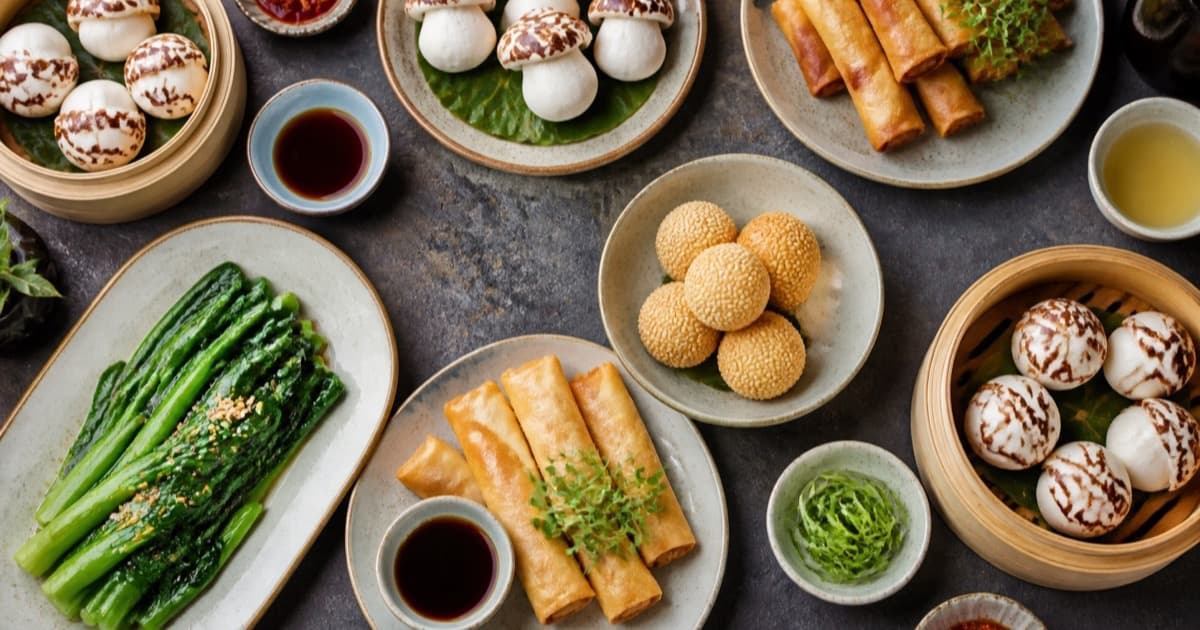
- Vegetable spring rolls (炸春卷): crispy cabbage, carrot and mushroom rolls. Confirm they are not fried in shared oil with meat items if that matters to you.
- Steamed vegetable buns (素菜包): fluffy bao filled with greens, mushrooms and sesame. Distinct from char siu bao, which is BBQ pork.
- Pan-fried chive dumplings (煎韭菜饺): often vegan, but some kitchens add shrimp; ask.
- Sesame balls (煎堆): chewy glutinous rice spheres with red bean paste, fried and rolled in sesame.
- Egg custard tarts (蛋挞): vegetarian (egg and pastry), not vegan.
- Stir-fried greens: gai lan or pea shoots with garlic. Request oyster sauce on the side or omitted; see the watch-list below.
- Tofu dishes: braised tofu pots and chilled tofu fa dessert in ginger syrup.
- Turnip cake (蘿蔔糕): frequently vegetarian, though some recipes include dried shrimp or Chinese sausage; ask which version they serve.
- Mango pudding (芒果布甸): the classic chilled finisher, gelatin-free at most Cantonese kitchens but worth confirming.
Hidden ingredients that catch vegetarians
Cantonese cooking treats pork and seafood products as seasoning. Watch for:
- Oyster sauce on almost every green vegetable dish. Ask for mushroom-based "vegetarian oyster sauce," which most kitchens stock.
- Dried shrimp or shrimp roe sprinkled over rice rolls and noodles.
- Lard in pastry doughs, especially old-school bakeries.
- Chicken stock in congee, fried rice and sauce bases.
- Worcestershire-style sauces in marinades; several brands contain anchovy.
- Har gow wrappers' neighbors: cross-contact is minor, but strict vegetarians should know steamers are usually shared.
How to actually order
Two sentences solve ninety percent of problems:
- "I'm vegetarian, no meat, no seafood." Say it when seated; most halls have someone who can steer you.
- Point at dishes and ask "Is this vegetarian?" rather than assuming from names. Turnip cake proves the rule: same dish, different recipes.
If language feels like a barrier, remember that Buddhist vegetarian tradition (齋, zhāi) is well understood in Chinese cuisine. Saying "I eat zhai" or showing the character 素 communicates more precisely than any English sentence.
Where plant-based diners have it easiest
A growing number of kitchens flip the model entirely: plant-based menus where nothing needs checking. In Los Angeles, Men & Beasts runs a fully plant-based Chinese menu and tea lounge, one of the highest-rated entries in our LA directory. For everyone else, big banquet halls always carry enough of the list above to feed a vegetarian guest properly.
A sample vegetarian order for two
- Steamed vegetable buns
- Vegetable spring rolls
- Pan-fried chive dumplings (confirmed no shrimp)
- Cheung fun with scallion, soy on top only
- Stir-fried gai lan, vegetarian oyster sauce
- Sesame balls and egg tarts to finish
That is six dishes, comfortably filling, entirely meat-free, and nobody at the table feels like an afterthought.
New to dim sum overall? Start with what to order on a first visit, then find a table in the full directory.