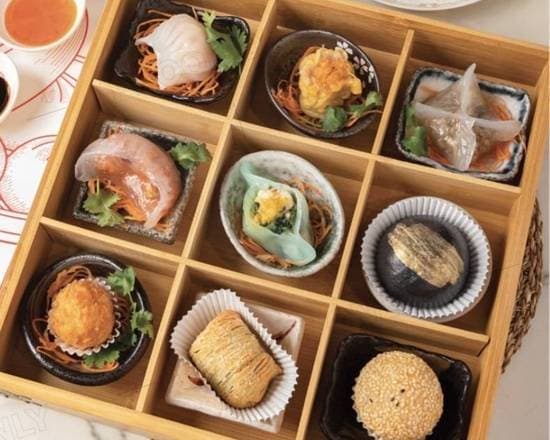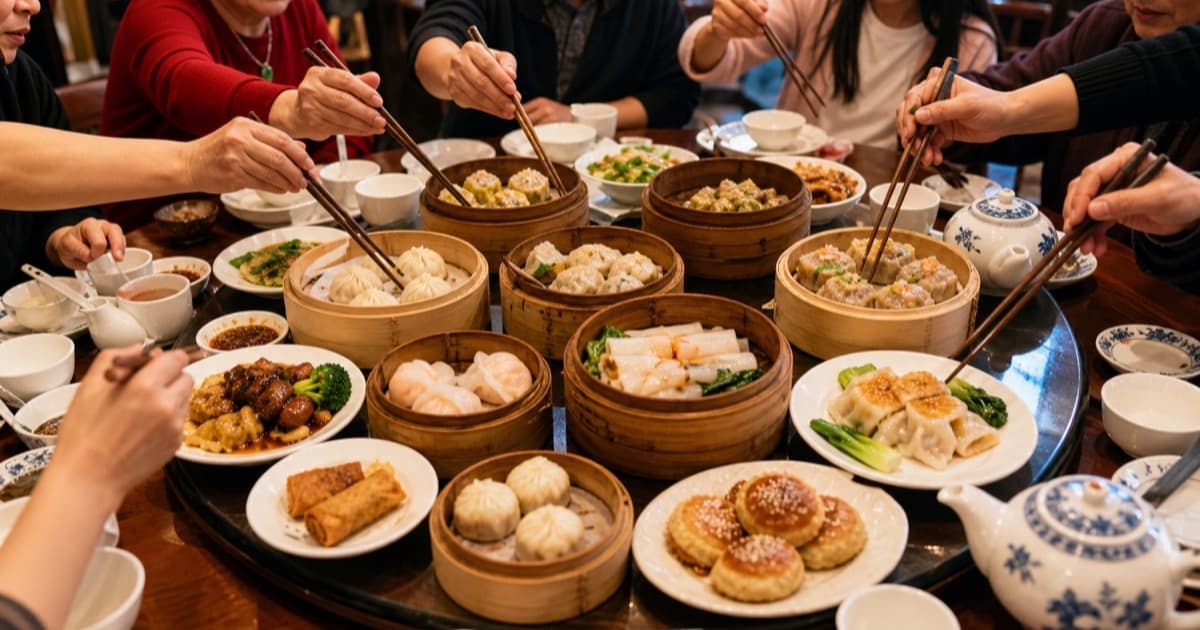
Dumplings are a food. Dim sum is a whole style of eating. Every dim sum meal includes some dumplings, but most dumplings have nothing to do with dim sum, and most dim sum meals include plenty of things that are not dumplings at all. If you search for "dumplings near me" you will find noodle shops serving eight kinds of boiled dumplings. If you search for dim sum, you get rolling carts, tea, egg tarts and a table full of small plates.
Here is the distinction, piece by piece.
What dim sum actually means
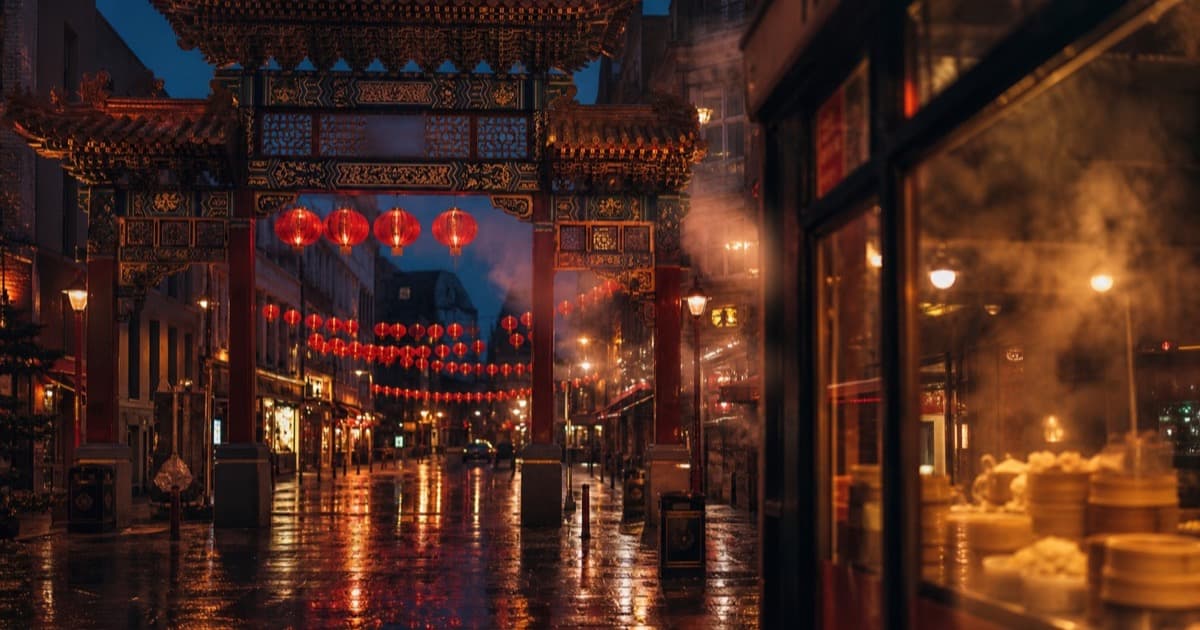
Dim sum (點心) translates roughly as "touching the heart." It began in teahouses along the Silk Road and matured in Guangzhou, where travelers resting between meals were served small bites alongside tea. That pairing of tea plus snacks became yum cha ("drink tea"), the weekend ritual now practiced across Guangdong, Hong Kong, and Chinatowns worldwide.
So dim sum describes the format: many small dishes, served morning to mid-afternoon, eaten with tea, shared by the whole table. A single meal might include steamed dumplings, barbecued pork buns, rice noodle rolls, pan-fried turnip cake, chicken feet, egg tarts and stir-fried greens.
What counts as a dumpling
A dumpling is dough wrapped around a filling, cooked by steaming, boiling, frying or a combination. That definition spans far more than Cantonese cuisine:
- Jiaozi: northern Chinese boiled dumplings, often whole meals on their own
- Xiao long bao: Shanghai-style soup dumplings
- Gyoza: Japanese pan-fried dumplings descended from jiaozi
- Momo: Nepali and Tibetan dumplings, increasingly common on dim sum-adjacent menus in cities like Vancouver
- Pierogi, empanadas, khinkali: different continents, same idea
None of those require carts, tea, or a Sunday morning.
Where the two overlap
The famous dim sum dishes that happen to be dumplings:
| Dish | Style | Notes |
|---|---|---|
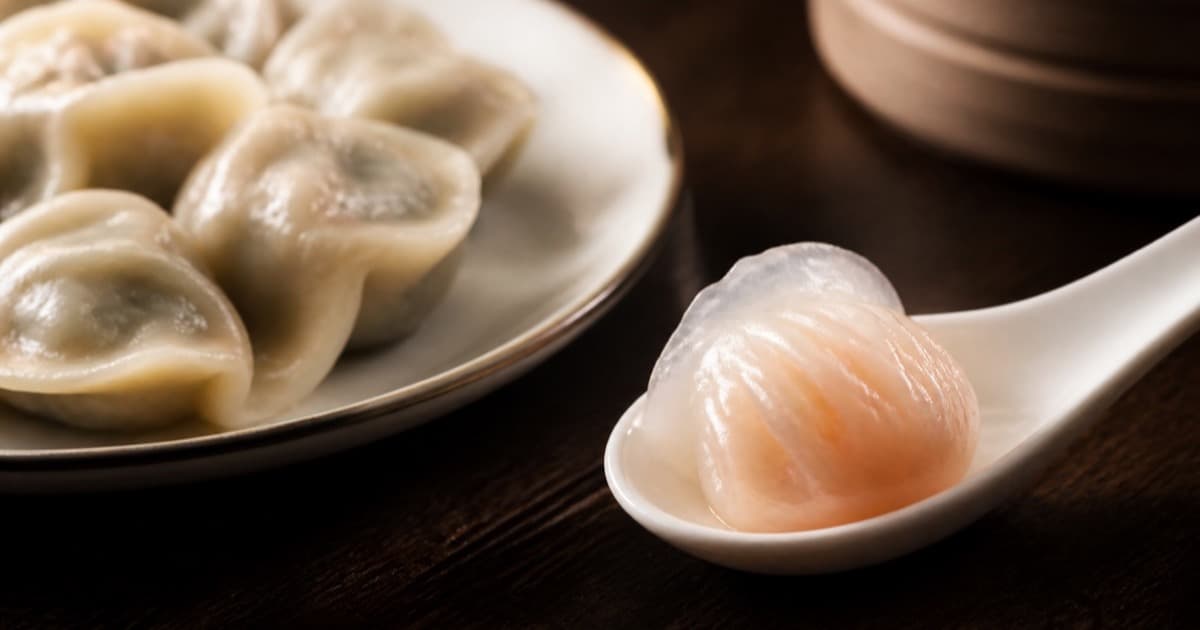
| Har gow | Steamed shrimp dumpling | The classic benchmark of a dim sum kitchen |
| Siu mai | Open-topped pork and shrimp | Topped with roe or carrot |
| Xiao long bao | Soup dumpling | Shanghai origin, now standard at dim sum houses |
| Chive dumplings | Pan-fried or steamed | Often mixed with shrimp; ask if vegetarian |
| Wonton | Boiled, in broth or on noodles | Also sold at standalone wonton shops |
If a restaurant serves all of these plus buns, rice rolls and desserts with tea, it is a dim sum restaurant. If it serves only dumplings plus noodles, it is a dumpling shop. Both are great; they answer different cravings.
What dim sum includes beyond dumplings
Roughly half of a typical dim sum menu is not dumplings:
- Char siu bao: steamed BBQ pork buns, arguably more iconic than any dumpling
- Cheung fun: silky rice noodle rolls with sweet soy sauce
- Lo mai gai: lotus-wrapped sticky rice with chicken
- Turnip cake and taro cakes: pan-fried savory cakes
- Egg tarts and sesame balls: the dessert course
- Phoenix claws, tripe, greens: the adventurous and vegetable columns
That breadth is why dim sum rewards groups: ten people can cover the entire spectrum, while a dumpling shop lunch is, well, dumplings.
Which one should you search for?
Searching depends on the meal you want:
- Want a weekend event: lazy hours, carts, tea refills, a loud happy hall? Search dim sum. Start with our directory of dim sum restaurants or learn what to order on your first visit.
- Want a fast, focused lunch: one steamer basket, one noodle bowl, done in twenty minutes? Search dumplings.
- Craving soup dumplings specifically? Either works. Many dim sum restaurants make excellent xiao long bao, but dedicated dumpling houses often perfect them.
The one-sentence answer
All dim sum contains dumplings, but dim sum is a shared tea-house meal built from dozens of small dishes, while dumplings are a single food found across many cuisines. Use both words when you travel: "dim sum" gets you the experience, "dumplings" gets you dinner.